
Finding Austin Residents
Austin has no single public roll of everyone who lives here. The useful route depends on what is already known. A current street address belongs first with the Travis Central Appraisal District and the City Property Profile map. A name tied to a purchase or lien belongs with the Travis County Clerk recording index. A past Austin household may appear in a city directory, a cemetery ledger, an archive series, or a census source. Each result has a narrow meaning, so an appraisal owner, deed party, court party, organization contact, and historical householder should remain distinct labels.
Start narrowly and keep the jurisdiction visible. Austin city services, Travis County offices, Texas agencies, federal courts, archives, and the postal service hold different slices of the record. An Austin mailing label is not proof that an address sits inside Austin or even Travis County. In Austin research, a City route and a Travis County route may both be needed for one address. When an Austin search produces a name, use a second independent official source before reaching a conclusion. An Austin record date, parcel or cause number, and source link make the result easier to check later.
- Confirm the exact address, city-limit status, county, and date that matter to the question.
- Search TCAD by property address, owner name, account number, or DBA when the inquiry concerns a parcel.
- Use the County Clerk index for recorded instruments, then retain the document number, date, and party role.
- For a historical household, compare a city directory year with the Austin History Center, Texas State Library, or County Archives holdings.
- When an online index stops, ask the named custodian for an existing record or an archive appointment rather than assuming the record does not exist.
Austin Resident Records Offices
The main Austin residents directory sources are spread across offices with separate roles. The Travis County Clerk preserves recorded instruments and provides the public recording index. TCAD supplies an appraisal-account view, while the City Property Profile map adds parcel and boundary context. The Travis County voter lookup is an individual status tool, not a street-wide roster. The Austin History Center and Travis County Archives supply the historical formats that online portals do not replace.
Travis County Clerk, Recording Division
5501 Airport Blvd Ste 100B
Austin, TX 78751
512-854-9188, option 7
Travis Central Appraisal District
Property accounts and appraisal data
Travis County, Texas
Use the current district contact listing
Travis County Voter Registration
2433 Ridgepoint Drive
Austin, TX 78754
512-854-9473
For an address-led investigation, the more detailed parcel sequence belongs on the Austin street directory page. Austin office names alone do not establish who currently occupies an Austin property.
Austin Property Roll Searches
TCAD is the first official stop for an Austin parcel question in Travis County. Its property search accepts owner name, property address, account number, DBA, and a map-search route. The district advises Austin searchers to omit suffixes and account for abbreviations, so a shorter name or street-only query can help when an exact string fails. Save the Austin account number and situs address before comparing the result with a recorded instrument or City GIS feature.
An Austin appraisal account describes the district's tax and valuation record. It does not prove title, current occupancy, or that a tax mailing address is where someone lives. TCAD states that current-year work is in progress, prior-year data is informational, and the public data has no warranty. Use the Austin account as a precise starting point, then test it against the Clerk's index and the Austin City map.
| TCAD field | How Austin searches use it |
|---|---|
| Owner Name | Optional text field; omit suffixes and broaden fewer words when names vary. |
| Property Address | Optional text field; a street-only search can broaden a missed address. |
| Account Number | Use the exact value from a prior parcel card when available. |
| DBA | Business or assumed-name option, not evidence of a personal residence. |
| Map Search | Opens a mapping route whose live fields can change. |
Travis County Deed Trails
The County Clerk's public-record search is a finding aid for Austin deeds, liens, plats, and related instruments. Quick and Advanced Search include Land Records, grantor or grantee terms, subdivision, document type or number, recorded-date ranges, and a choice between Index Only and Index & Full Text/OCR. A useful Austin record trail checks both grantor and grantee directions, plus initials, married or maiden forms, and the Austin legal subdivision when a surname search is thin.
Most online Austin recording index data is described as mid-1980s to present. The Clerk and Austin archives retain earlier books, microfilm, and historical series. An online print can be unofficial and watermarked, and redactions can apply. A Clerk-made copy is listed at $1 per page; a certified copy adds a $5 certification fee plus copy charges. Recheck the current Clerk fee information before ordering, because schedules can change.
- Index
- A finding tool that points to a recorded instrument, not the certified underlying record.
- Grantor and grantee
- The party giving an interest and the party receiving it in a recorded instrument.
- Parcel
- A mapped property unit, often joined across systems through an account number and legal description.
- Criss-cross directory
- A historical address-to-name directory that can support, but not prove, past occupancy.
Note: Legal descriptions and instrument numbers are stronger bridge fields than a street name that may have changed over time.
Current Austin Resident Directories
Current Austin resident-directory evidence is record-specific. Austin TCAD can show an appraisal owner and parcel context. The Austin Clerk index records instrument parties. The Austin voter lookup can confirm an individual's registration status under its rules. Austin courts, licenses, and organization registries each show a separate relationship to a source. None should be relabeled as a complete roster of an Austin household or city.
| Source | Record role | Keeper | Access route |
|---|---|---|---|
| Appraisal account | Owner, account, situs, values, and parcel clues | TCAD | Free name, address, account, or DBA search |
| Recording index | Grantor, grantee, document, date, legal description | Travis County Clerk | Online index, Clerk copies, older microfilm |
| Voter lookup | Individual registration or status response | Travis County | First name, last name, and birth date required |
| Community Registry | Organization contact, stated boundary, meeting data | City of Austin | Organization name or five-digit ZIP search |
| Public court portals | Party role, cause, setting, and record route | County, District, or Municipal Court | Portal plus custodian copy request |
A person-first question needs a careful comparison of these source roles. The Austin resident lookup page focuses on that verification sequence and its limits.
Austin Voter Status Route
The Travis County voter lookup is a narrow Austin identity and status tool. It requires first name, last name, and birth date in the stated format. A public Austin individual lookup is different from the formal Texas Secretary of State voter-file request. Texas voter rules protect Social Security, driver-license or PID information, and some addresses. Travis also offers an Austin web-suppression form, while the Texas Attorney General runs an Address Confidentiality Program for eligible participants.
The Travis voter lookup is the official source shown here.
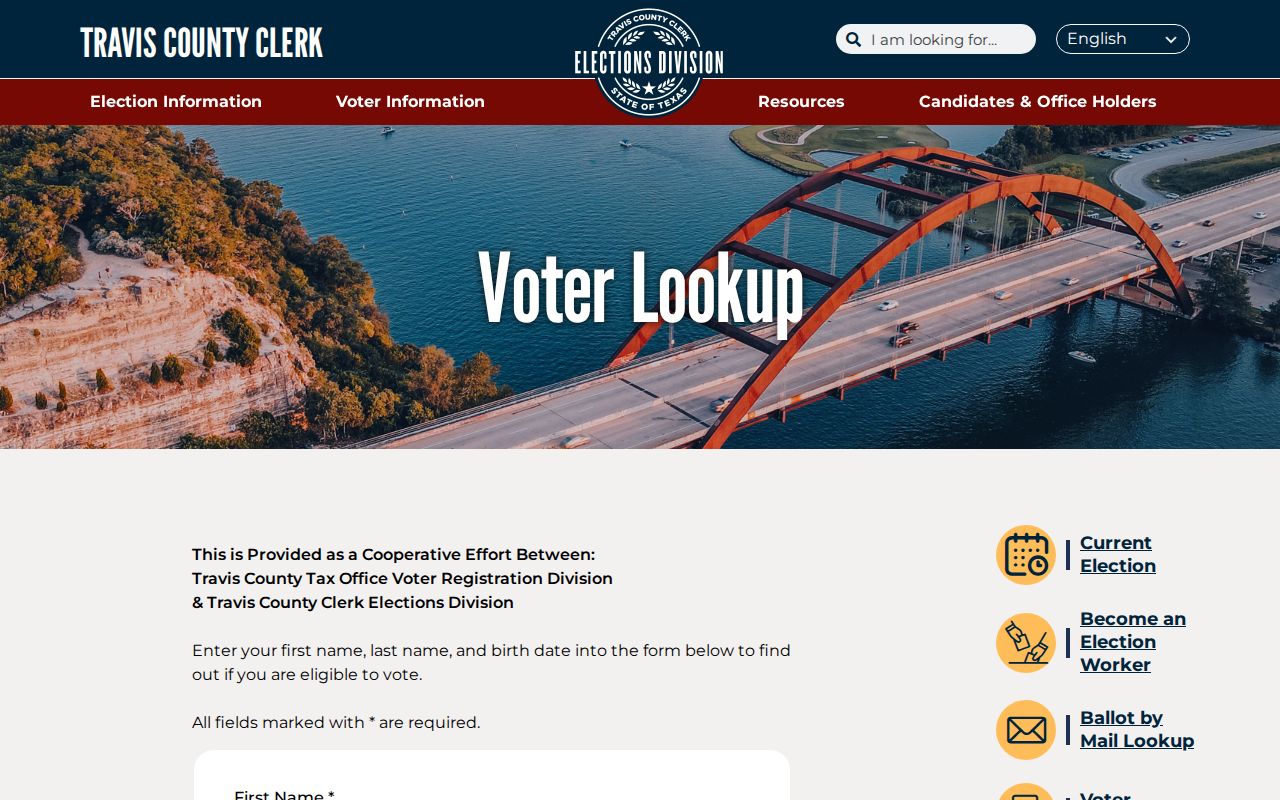
The screen illustrates that the service asks for individual identifiers. It is not a lawful way to assemble a street, block, or household list.
Austin Court Search Routes
Travis County court records divide Austin matters by court and case type. The Odyssey route supports a record number or a Last, First Middle name search, hearings, and location filters for County Clerk, District Clerk, and Probate Court. The District Clerk publishes online Family and Civil coverage from 2006 forward and Criminal coverage from 2008 forward. Austin Municipal Court handles Austin city traffic, ordinance, juvenile, disabled-parking, and Class C matters through its own search and request process.
An Austin docket name is not proof of identity or current residence. The observed Travis criminal docket fields include defendant, attorney, cause, date and time, courthouse instruction, court, floor, type, and matter. Verify the Austin court, case number, party role, date, and any public document route. Earlier, sealed, juvenile, expunged, and protected records need the custodian's own access process. Statewide re:SearchTX and federal PACER are discovery routes with their own Austin coverage and access limits.
Austin Vital Record Requests
Austin vital-record access starts with the place and date of the event. The Travis County Clerk describes local birth and death holdings for 1903 through 1956. Events inside Austin city limits route to City of Austin Vital Records, events elsewhere in Travis County can route to the relevant justice of the peace, and other Texas events route to DSHS. The County page lists $22 for a certified birth copy and $20 for a certified death copy, but current Austin charges and methods should be confirmed before filing.
The Travis County Clerk vital statistics page supplies the local routing information.
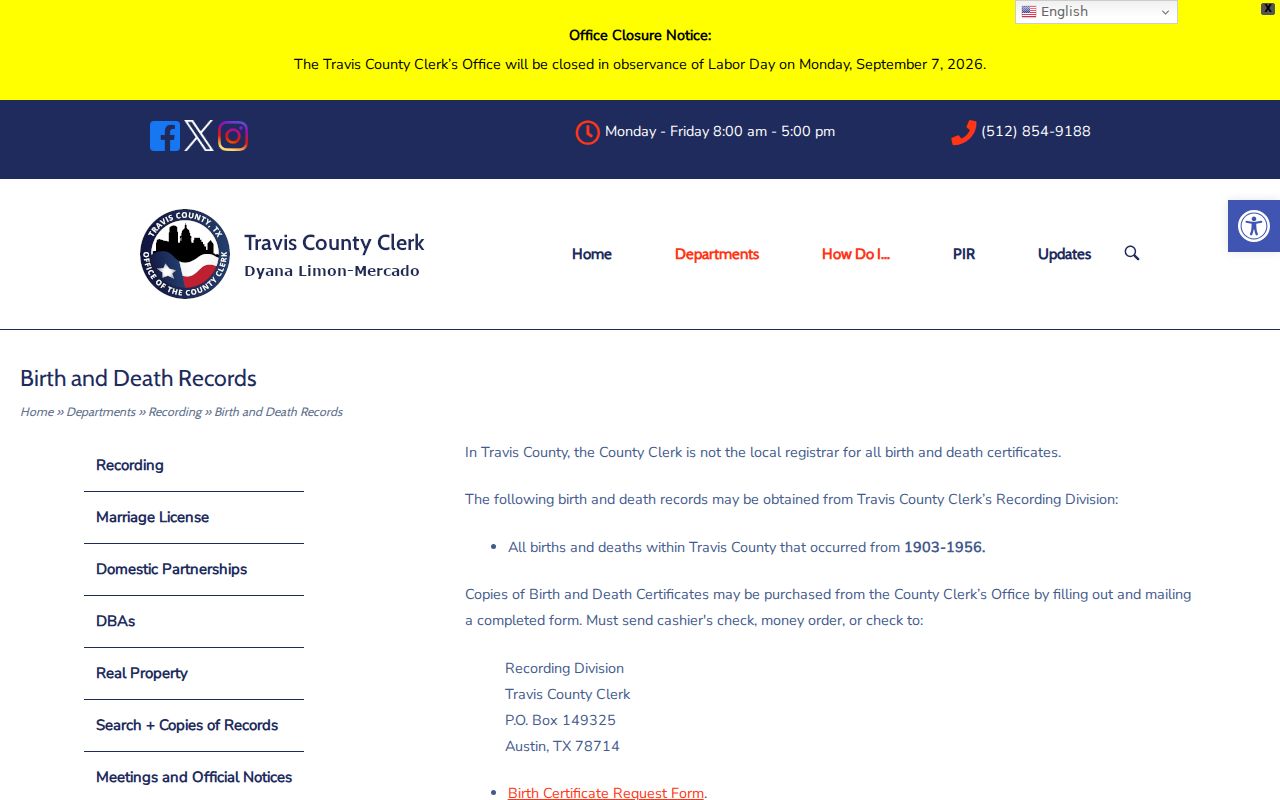
The page is useful for choosing the correct local custodian before completing an application.
DSHS says Austin birth records become public after 75 years and Austin death records after 25 years, subject to record type and law. More recent copies require a qualified immediate family member or documented direct, tangible interest. An Austin verification letter is not a certified record. The state forms page carries the current VS-140 birth, VS-142 death, marriage or divorce, correction, adoption, and paternity routes.
Texas DSHS vital applications and forms is the official state starting point.
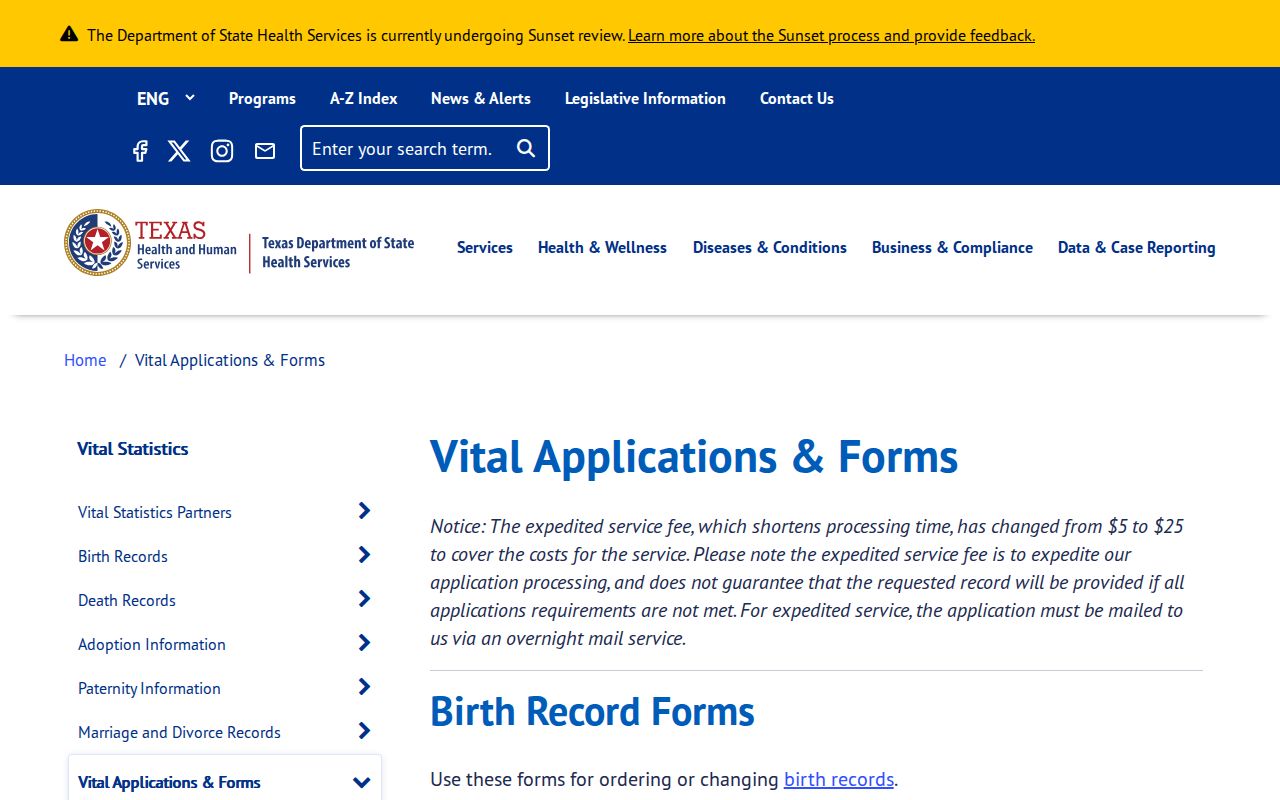
The state form list helps distinguish a certificate request from a restricted, specialized, or correction process.
Austin License and Filing Checks
An Austin Texas credential or filing can confirm a professional, entity, or recorded business role, but it does not confirm a person's home address. DSHS license search offers name, license type, city, county, and license-number modes for covered programs. The Texas Medical Board, TEA, State Bar, and other boards operate their own Austin scope-limited systems. For Austin business records, SOSDirect provides entity search, filings, copies, and certificates. Travis County's DBA route covers unincorporated assumed names, while incorporated assumed-name rules differ.
Texas Secretary of State business services provides the official SOSDirect entry point.
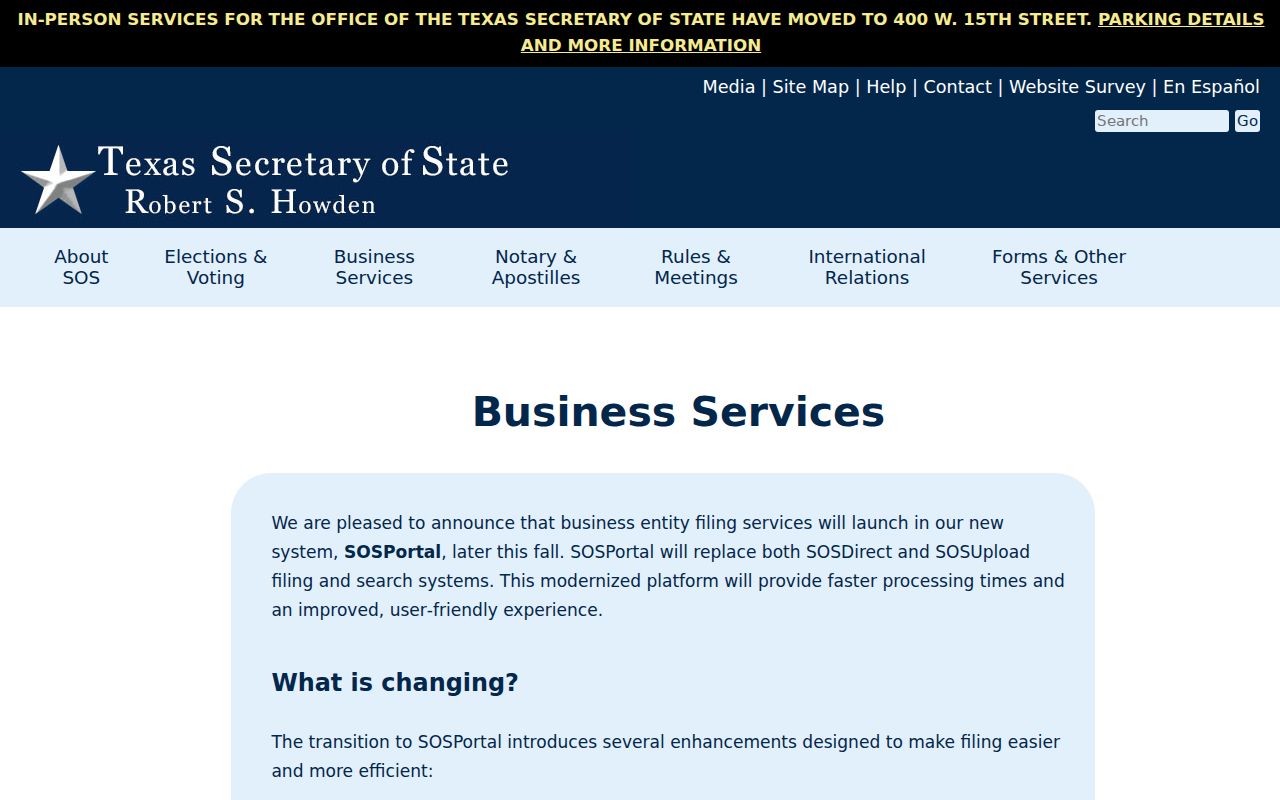
Use an entity name and filing details to describe a business record, not to infer an Austin residence or personal ownership beyond the record.
Austin Boundary Checks
Austin, Travis County, an Austin postal city label, an Austin ZIP polygon, and a historical Austin jurisdiction are separate layers. The City ZIP map identifies postal ZIPs wholly or partly within city limits, including 787xx and edge 786xx areas. It does not say that every address in one of those ZIPs is inside Austin. The Austin City ZIP GIS layer supplies ZIPCODE, CITY, STATE, and geometry fields, while the City directs Austin postal ZIP questions to USPS.
Check the exact address in the map and retain the source date. City Address Management handles Austin, unincorporated Travis County, and several nearby municipalities, yet it does not maintain ZIP codes. Annexation, disannexation, street renaming, and address reassignment can change which city or county source applies to an older record. A full address history should preserve the original street string, direction, type, unit, legal parcel description, and date.
Austin's Three Record Eras
Austin's large growth makes old and new sources work very differently. The 2020 census counted 961,855 people in Austin, and the reviewed 2024 estimate was 993,588. That scale helps explain why current portals can be extensive while older material remains on shelves, microfilm, or in selected scans. The County Clerk's permanent library and the Travis County Archives preserve record series that predate online search.
For local research, think in three eras: books and microfilm, indexed digital systems, and current online images or maps. Travis County Archives lists narrow series such as tax rolls from 1840 to 1995, land registers from 1877 to 1936, city lot registers from 1879 to 1974, and inquests from 1887 to 1977. An online no-result may therefore be a format or coverage issue, not an absence of records. The FY 2026 digitization recommendation is a proposal, not proof that older paper has become fully searchable.
Historic Austin Resident Directories
Austin city directories begin with the 1872-73 era and continue through later twentieth-century runs, with gaps. The Austin History Center, Texas State Library, and UT Briscoe Center hold overlapping rather than identical editions. Briscoe identifies a series from 1889 through 1958, and the Austin History Center's biographical guide describes Criss-Cross directories from 1957 with gaps. Selected volumes are digitized, while other editions require a Reading Room, microform, or archive visit.
These volumes record a dated historical context, not a permanent residence finding. Depending on the edition, an entry can include a name, occupation, address, phone, street section, or cross-reference. The Austin History Center notes that an address cross-reference commonly appears after 1905, and its preservation research guidance cautions that directory data may have been collected before the publication year. The full collection, entry-reading method, and repository choices are detailed in the Austin city directory section.
Note: Keep a directory edition year, page, exact address wording, and repository with every historical household lead.
Austin Source Limits
Official Austin records are useful because their custodian and scope are known, not because any one Austin result settles every question. An Austin appraisal owner may be a trust or entity. An Austin deed party may be a grantor, grantee, heir, or attorney-in-fact. An Austin court caption can carry a filing address. An Austin directory entry can be old or incomplete. Use at least two independent official sources where feasible, preserve the record label, and say when a result does not resolve identity, Austin city limits, current occupancy, or a protected field.
Texas Public Information Act requests under Government Code Chapter 552 seek existing public information. The Travis County public information request route explains that staff need not create a record, answer general questions, or conduct legal research. Ask the custodian for a defined record series, date range, document, parcel, or case number. Review any cost estimate, redaction, or exception notice before relying on the response.